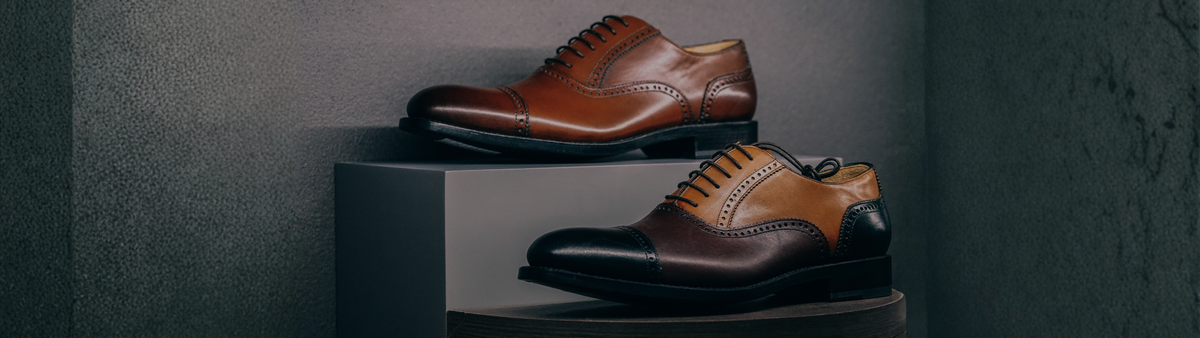
Weather protection is not about making leather untouchable. It is about choosing the right defence for the way the leather will actually be worn: a light, invisible barrier for fine shoes; carefully built cream and wax protection for everyday footwear; or deeper nourishment for smooth leather that genuinely works outdoors. This is the approach I share with The Elegant Oxford community—protect with purpose, apply sparingly and give every layer time to perform.

Start here
Choose protection by how the leather is used
Compatibility is only the beginning. A product suited to a mountain boot may still be unnecessarily rich for a polished Oxford. Choose the description that matches the article, its finish and the conditions it will face.
Fine and everyday leather
Dress shoes, bags and smooth-leather articles that need rain, stain and daily surface protection without changing their appearance.
Follow everyday protectionLeather soles
Fine leather outsoles or heavier outdoor soles requiring protection from moisture, salt and premature abrasion.
Protect leather solesOutdoor and working leather
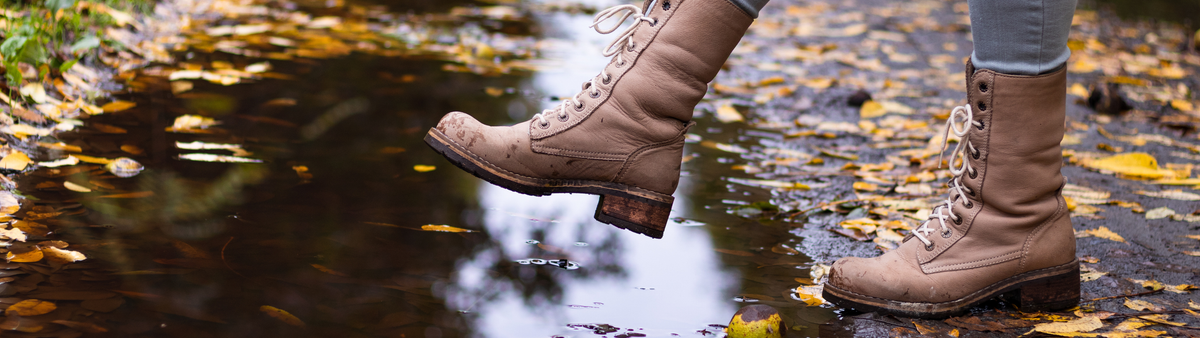
Hiking, mountain, country, hunting, equestrian or work footwear exposed repeatedly to water, snow, dirt and flexing.
Follow outdoor protectionBefore you begin
Is this the right guide for your leather?
This guide is written for conventional smooth and compatible grained leather. It includes both fine finished footwear and robust smooth leather, but the recommended treatment changes according to construction, absorbency and use.
Use this guide for
- Compatible smooth calfskin and finished smooth leather
- Compatible grained smooth leather
- Fine smooth-leather dress shoes and boots
- Smooth-leather bags, belts, garments and luggage
- Robust smooth-leather hiking, work, country and equestrian footwear
- Fine and heavy-use leather outsoles
Consult a material-specific guide for
- Suede, nubuck, velour and roughout leather
- Shell cordovan
- Oiled, waxed and pull-up leather when its specialist guide applies
- Patent, metallic, pearlescent, laminated or coated leather
- Reptile, fish leather, shagreen and exotic skins
- Delicate aniline, nappa or vegetable-tanned leather when compatibility is uncertain
Smooth leather is a category, not one finish. A highly polished dress shoe and a thick smooth-leather riding boot may both accept a product, yet need completely different levels of nourishment. Identify the article before choosing its protection.
Understand the exposure
How weather affects smooth leather
| Exposure | What it can do | Best response |
|---|---|---|
| Rain and wet pavement | Darkening, water marks, swelling, loss of polish and gradual depletion of oils | Preventive protection, prompt blotting and slow natural drying |
| Salt and winter slush | White deposits, stiffness, tide lines and progressive damage if residue remains | Remove deposits with Hiver Winter before nourishing or polishing |
| Repeated snow and mud | Moisture penetration, abrasive contamination and drying through repeated exposure | Outdoor-specific protection and cleaning after use |
| Heat and low humidity | Accelerated dryness, stiffness and a greater risk of cracking | Moderate nourishment and storage away from direct heat |
| High humidity | Slow drying, odour, mould risk and softened finishes | Air circulation, complete drying and breathable storage |
| Direct sunlight | Fading, uneven colour and drying over time | Limit exposure and rotate stored or displayed articles |
A well-protected surface gives you more time to blot moisture and remove contamination. It does not make smooth leather waterproof, nor does it remove the need for sensible drying and aftercare.
Choose by article and purpose
Which protective treatment should you use?
| Leather and intended use | Recommended treatment | Why |
|---|---|---|
| Fine smooth leather | Super Invulner Protector Spray | Invisible water and stain protection without changing its appearance |
| Clean, porous smooth leather | Protector Spray | Water-based, solvent-free protection against rain, snow, dirt and everyday stains |
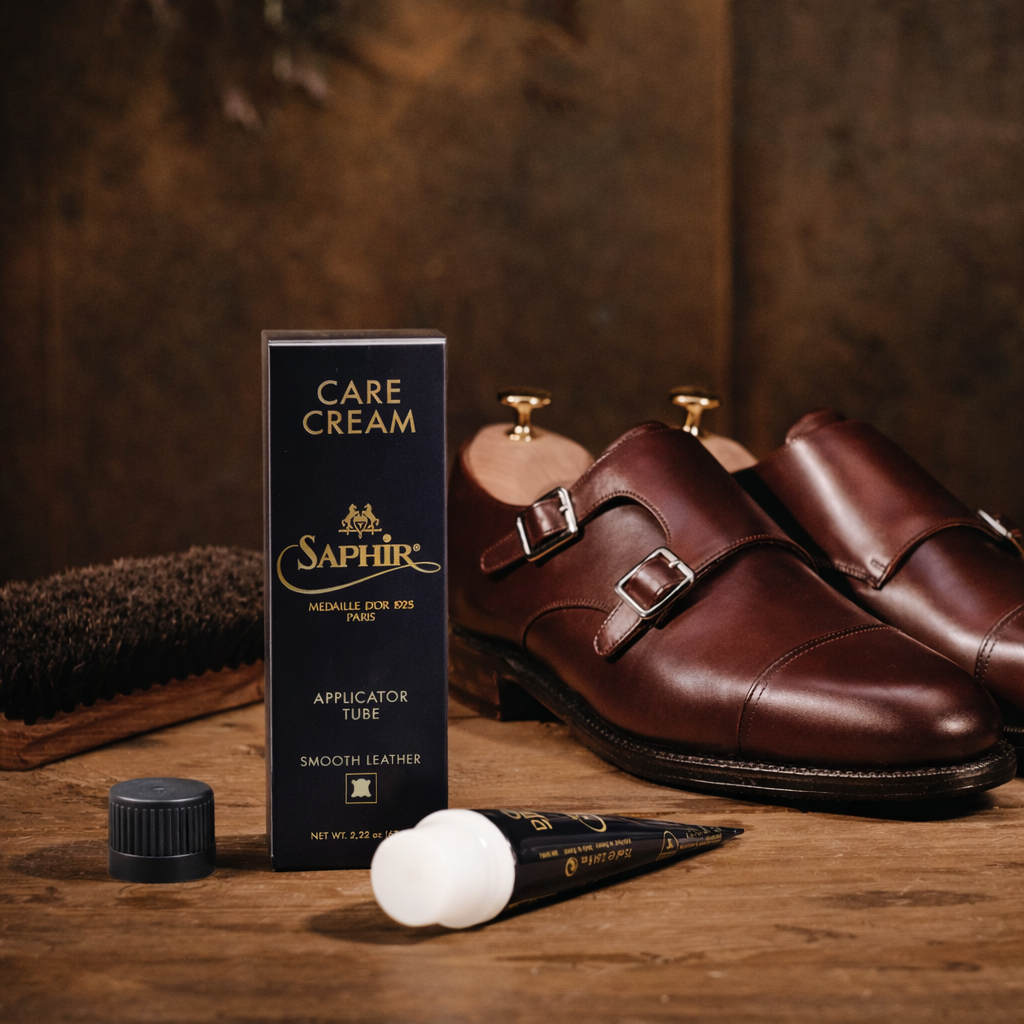
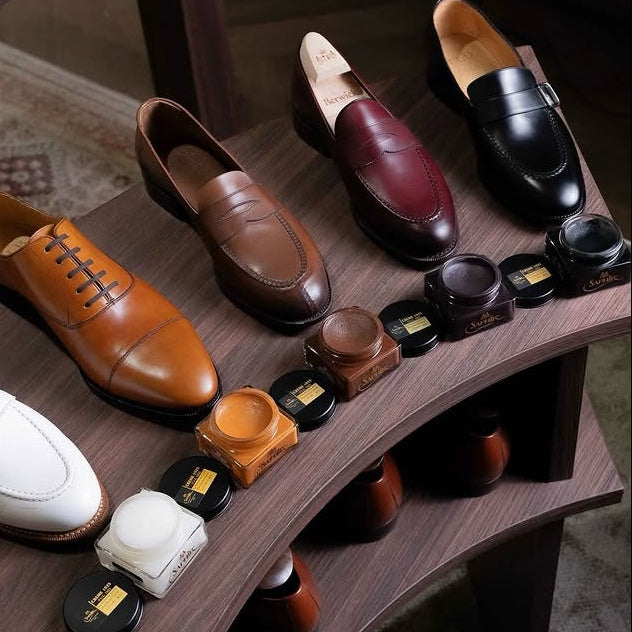
| Everyday polished footwear | Crème 1925 Pommadier Cream or Crème Surfine Shoe Cream | Nourishment, colour maintenance, protective waxes and a natural shine |
| Wax protection and shine | Pâte de Luxe Wax Polish | Protection and shine across the complete shoe, with additional layers possible on rigid toe caps and heel counters |
| Fine leather outsoles | Leather Sole Guard | Reduces water, salt and abrasion damage without leaving a slippery or floor-marking finish |
| Heavy-use outdoor soles | Graisse HP® Dubbin | Richer waterproofing and softening for soles exposed to demanding outdoor wear |
| Mountain and extreme-weather leather | Everest® Dubbin | Intensive plant-based nourishment and protection from snow, water and dirt |
| Outdoor leather exposed repeatedly | Dubbin Graisse | Deep conditioning and weather protection for rain, snow, mud and hard use |
| Walking, hunting, sporting and equestrian footwear | Sport Loisir Outdoor Dubbin | Waterproofing, softening and optional colour renewal for practical outdoor footwear |
| Robust smooth leather | Graisse HP® Dubbin | Rich nourishment, softening and water resistance for boots and working footwear |
| Thick, dry or aged working leather | Étalon Noir® Neatsfoot Oil Softener | Intensive softening and replenishment for cowboy, hiking, horse-riding and similarly substantial leather |
Crème 1925 Pommadier Cream and Crème Surfine Shoe Cream sit at the same care level. They are alternative pigmented creams, not obligatory consecutive stages. Choose according to the leather, finish, colour range and routine you prefer.
Protection begins with a clean, dry surface
Prepare without over-cleaning
-
Remove loose dirt
Use the Horsehair Brush or Polishing Brush on clean, dry smooth leather. Allow caked mud to dry and remove it first with the Mud Remover Brush.

-
Clean only when necessary
Light surface soil may need only a compatible gentle cleaner. Use Réno'Mat Leather Cleaner when stubborn dirt or accumulated product buildup genuinely needs removal—not before every weatherproofing application.
-
Let the leather dry completely
Protective sprays, creams, waxes, dubbins and oils should not trap moisture beneath the surface. Dry at room temperature with good air circulation.
-
Patch test the complete routine
Test every chosen product on a concealed area of the same leather. Check the dry colour, feel, sheen and absorption before treating the visible surface.
-
Choose one primary protection strategy
Fine shoes may use cream, wax and an invisible protector in controlled layers. Outdoor boots may need dubbin instead. Do not stack every compatible product simply because it appears in this guide.
Routine 1
Protect fine and everyday smooth leather
This routine preserves a refined appearance while adding practical resistance to ordinary rain, dirt and staining. Use only the stages the leather needs.
-
Support and brush the article
For footwear, insert correctly sized Cedar Shoe Trees. Remove dust with the Horsehair Brush or Polishing Brush.
-
Clean and allow to dry
Use a compatible cleaner only when dirt or buildup requires it. The surface must be completely dry before cream, wax or protective spray is applied.
-
Choose one nourishing cream
Apply a small amount of Crème 1925 Pommadier Cream or Crème Surfine Shoe Cream evenly with a clean cloth or application brush. Let it settle, then buff thoroughly.

-
Add wax protection when desired
Apply one or two very thin coats of Pâte de Luxe Wax Polish across the complete shoe. Allow approximately five minutes between coats and buff. Build further thin layers only over rigid toe caps and heel counters when a higher shine is desired.

-
Add invisible protection when appropriate
For fine smooth leather, shake Super Invulner Protector Spray, hold it approximately 20 cm from the clean surface and mist evenly without saturation. Allow 30 minutes to dry before use.

-
Use the water-based alternative selectively
Protector Spray is a water-based, solvent-free option for clean, porous smooth leather. Heavy accumulations of cream or wax may prevent an even application, so use it as an alternative strategy rather than automatically adding it over a built wax finish.
A coherent routine performs better than a crowded one. Nourish, protect and finish according to the leather's condition, then stop when the surface is even and properly defended.
Routine 2
Protect leather soles from moisture and premature wear
Leather soles meet water, grit and salt before the upper does. A dedicated sole treatment reduces absorption and abrasion while preserving the natural function of the leather.
Fine leather outsoles: Leather Sole Guard
-
Clean and dry the sole
Remove loose grit and make sure the leather outsole is fully dry. Do not seal damp salt or soil into the sole.
-
Apply sparingly
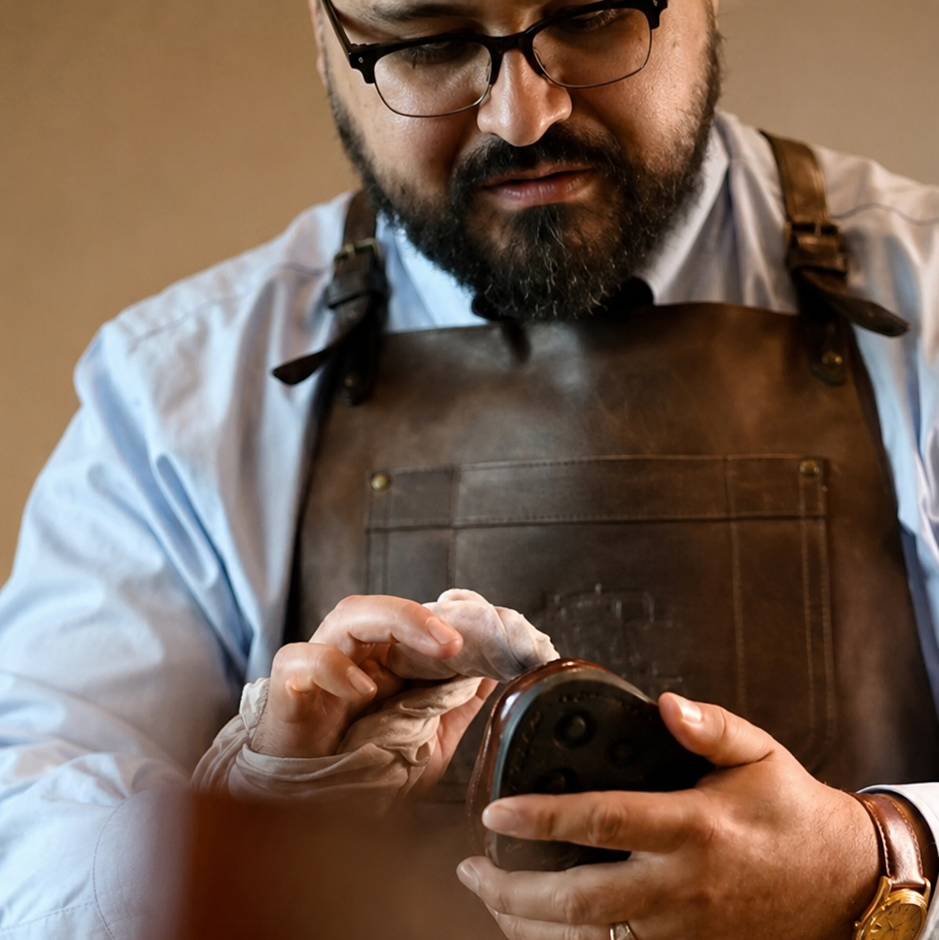
Use a dry cotton chamois to apply a light, even layer of Leather Sole Guard over the exposed leather outsole.
-
Allow one hour for the first coat
Let the oil penetrate without walking on the sole. Wipe away any product that remains visibly unabsorbed.
-
Add a second light coat only if useful
When additional treatment is desired, apply another restrained layer and remove excess product.
-
Dry for at least six hours
Preferably leave the shoes overnight before wearing them. This allows the treatment to settle and avoids transferring fresh product to the floor.
Outdoor and heavy-use soles: Graisse HP® Dubbin
For robust outdoor shoes and boots repeatedly exposed to wet ground, Graisse HP® Dubbin offers richer waterproofing and softening. Apply a very light layer to a clean, dry compatible sole, work carefully around the perimeter and welt, allow it to absorb and dry completely, then remove any excess before wear.
Sole treatment slows wear; it cannot prevent it. Rotate footwear, avoid soaking leather soles when practical and inspect thinning, loose stitching and worn edges regularly.
Routine 3
Protect outdoor and working smooth leather
Dubbins and conditioning oils are designed for leather whose priority is flexibility and weather resistance rather than a crisp dress-shoe finish. They may deepen colour, soften structure and change how readily the surface accepts a high shine.
-
Remove mud, grit and old contamination
Let mud dry, use the Mud Remover Brush and clean further only when necessary. The leather must be clean and fully dry before a rich treatment is introduced.
-
Select the treatment by use
Choose Everest® Dubbin for mountain and extreme-weather exposure; Dubbin Graisse for deeply nourishing outdoor protection; Sport Loisir Outdoor Dubbin for walking, hunting, sporting and equestrian footwear; or Graisse HP® Dubbin for robust waterproofing, softening and sole-edge care.
-
Test for darkening and finish change
Apply a tiny amount to a concealed area and allow it to absorb fully. This is especially important on pale, polished or absorbent smooth leather.
-
Apply a thin, even layer
Use a clean cotton cloth or suitable application brush. Massage the product gently into the leather, paying attention to flex points, seams and welts without leaving thick deposits.
-
Allow absorption before judging the result
Remove unabsorbed excess and give the leather time to settle. Add another thin layer only if the surface remains genuinely dry after the first has absorbed.
-
Buff compatible smooth leather
Use the Polishing Brush or Horsehair Brush to remove residue and refine the surface. The intended finish is practical, nourished and protected—not necessarily highly glossy.
A 100% plant-based natural treatment for smooth leather exposed to mountain conditions, snow, water and dirt. It may permanently darken smooth leather.
A deeply conditioning treatment enriched with mink and salmon oils for outdoor footwear exposed to rain, snow, mud and repeated hard use.
A practical dubbin for smooth-leather walking, hunting, sporting, leisure and horse-riding footwear, available in Neutral and Black.
A rich castor-oil-based treatment that nourishes, waterproofs and softens robust smooth leather and compatible leather soles.
Intensive care for substantial leather
When to use Étalon Noir® Neatsfoot Oil Softener
Étalon Noir® Neatsfoot Oil Softener belongs exclusively within robust outdoor, working and equestrian care. It is intended for thick, dry, stiff or aged leather such as cowboy boots, hiking boots, horse-riding boots, saddles and tack—not fine dress shoes.
-
Confirm the leather needs intensive softening
Do not use neatsfoot oil merely because rain is expected. Choose it when substantial leather has become dry, stiff or depleted and requires deeper replenishment.
-
Clean and dry completely
Remove dirt with the appropriate method. When equestrian leather requires deep cleaning, use Etalon Noir® Saddle Soap and allow it to dry naturally—overnight is ideal—before introducing oil.
-
Test for darkening
Natural oil can deepen colour and alter the finish. Confirm that the change is acceptable in a concealed area.
-
Apply a minimal amount
Massage a small quantity evenly with a clean cloth, concentrating on areas that are genuinely dry or stiff.
-
Allow full absorption
Wipe away product remaining on the surface. Reassess only after the oil has absorbed; several controlled applications are safer than one saturating coat.
Neatsfoot oil is valuable when thick working leather has lost flexibility. It should not replace the lighter cream, wax or invisible spray routine used on fine smooth-leather footwear.
After unexpected rain
What to do when smooth leather gets wet
-
Remove surface moisture promptly
Blot with a clean absorbent cloth. Do not rub, as this may spread contamination or disturb a softened finish.
-
Remove wet laces and open the footwear
Allow air to circulate around the tongue, eyelets and lining. Do not seal wet shoes inside a box or travel bag.
-
Insert Cedar Shoe Trees carefully
Use correctly sized Cedar Shoe Trees to support the shape and help manage internal moisture. Do not force an oversized tree into saturated leather.
-
Dry naturally
Leave the shoes at room temperature with good ventilation. Keep them away from radiators, heaters, hairdryers, fireplaces and direct sunlight.
-
Wait until fully dry before treating
Damp leather looks darker and absorbs products unpredictably. Only once dry should you brush, assess salt marks and decide whether nourishment or protection needs renewal.
-
Restore care according to condition
If the leather feels normal, a light cream and buff may be sufficient. If it feels dry, use the appropriate nourishing cream. If colour loss remains, consult the Smooth-Leather Repair & Recolouring Guide.
Winter rescue
Remove salt, water and snow marks before polishing
White winter marks are deposits, not fading. Covering them with cream or wax traps the problem beneath the finish and can leave the leather increasingly stiff.
-
Let the footwear dry and remove loose dirt
Brush only when the surface and any mud are dry. If additional deep cleaning is genuinely required, use Réno'Mat Leather Cleaner first and allow the leather to dry completely.
-
Shake Hiver Winter
Patch test Hiver Winter Salt Stain Remover on a discreet part of the same leather.
-
Treat the white marks
Apply the product to the deposits with a soft cotton cloth. Work with control rather than soaking the surrounding leather.
-
Allow the leather to dry fully
Do not polish while the treated area remains damp. Reassess the colour and feel only after natural drying.
-
Nourish and protect again
Use Crème 1925 Pommadier Cream or Crème Surfine Shoe Cream where appropriate, then rebuild wax or spray protection according to the intended use.
If colour loss remains: cleaning has revealed damage rather than failed. Continue with the Smooth-Leather Repair & Recolouring Guide instead of adding repeated layers of ordinary polish.
Adapt the routine
Protection by climate and season
Begin with clean, nourished leather and maintain the appropriate spray or wax barrier. Rotate footwear so each pair can dry completely between wears.
Protect before exposure, inspect after wear and remove white deposits promptly with Hiver Winter. Treat leather soles as well as uppers.
Prioritise moderate nourishment and protection from direct heat. Do not compensate for dryness by saturating leather with rich oil or dubbin unless its construction and use justify it.
Use breathable storage, allow airflow and never put damp shoes into bags or closed cabinets. Protection is useful, but complete drying remains essential.
Clean and dry the article, insert Cedar Shoe Trees where appropriate and store it away from sunlight in a breathable cotton bag.
Protect before departure, carry a clean cloth and let footwear acclimatise and dry before reapplying products in a new environment.
One material, different objects
Adjust protection to the article
Prioritise Crème 1925 Pommadier Cream or Crème Surfine Shoe Cream, Pâte de Luxe and Super Invulner. Keep rich dubbins and oil for footwear whose construction and use genuinely call for them.
Empty and support the article, test every treatment under a flap or on the base, and apply spray evenly across complete matching panels. Avoid buildup around handles, seams and hardware.
Work in a ventilated area and test for colour or feel changes where they will not be seen. Treat complete panels evenly and allow the garment to dry fully before wearing or returning it to a wardrobe.
Use very small quantities and preserve flexibility. Heavy wax buildup can crack along repeated bend points, while rich oil may soften a structured belt more than intended.
Concentrate on exposed corners, handles and bases without overloading them. Let every treated surface cure completely before the article contacts clothing.
Select the appropriate dubbin or Étalon Noir® Neatsfoot Oil Softener according to thickness, dryness and exposure. Practical flexibility and weather resistance take precedence over a dress finish.
Quiet technique, better protection
Common mistakes to avoid
- Treating every smooth leather with dubbin. Rich outdoor products may darken, soften or alter a fine polished finish.
- Applying protection over dirt, salt or dampness. The treatment can trap contamination and moisture beneath the surface.
- Spraying too closely or heavily. A fine, even mist protects better than wet patches.
- Using Protector Spray over heavy cream or wax buildup. Its water-based formula is better suited to clean, porous smooth leather.
- Assuming Super Invulner makes leather waterproof. It provides powerful resistance, but prompt care after exposure still matters.
- Applying one thick wax layer. Pâte de Luxe performs best in very thin coats followed by proper drying and buffing.
- Using direct heat on wet leather. Rapid drying can harden, shrink, distort or crack the material.
- Wearing freshly treated leather soles. Leather Sole Guard and Graisse HP® Dubbin need time to absorb and dry.
- Using neatsfoot oil on fine dress shoes. Étalon Noir® belongs to thick, dry, aged and hardworking leather.
- Reapplying by calendar alone. Judge protection by wear, cleaning and exposure rather than adding product automatically.
Build only the protection you need
Recommended products and tools
Invisible water and stain protection for fine smooth leather without changing its appearance.
View protectorWater-based, solvent-free protection for clean, porous smooth leather and modern mixed-material footwear.
View protectorPremium nourishment, colour renewal, wax protection and a refined natural shine for fine smooth leather.
View creamNourishment, colour maintenance, protective waxes and shine for everyday smooth-leather care.
View creamWax protection and shine across the complete smooth-leather shoe, with further layers possible on rigid areas.
View wax polishPlant-based protection for fine leather outsoles against moisture, salt and premature abrasion.
View sole protectionIntensive plant-based nourishment and waterproofing for mountain and extreme-weather smooth leather.
View dubbinDeep nourishment and protection for outdoor smooth leather exposed to rain, snow, mud and demanding wear.
View dubbinWaterproofing, softening and colour renewal for walking, hunting, sporting and equestrian footwear.
View outdoor dubbinRich nourishment, waterproofing and softening for robust smooth leather and heavy-use leather soles.
View dubbinIntensive softening for thick, dry, stiff or aged outdoor, cowboy and equestrian smooth leather.
View oil softenerFor removing white marks and deposits caused by salt, water and snow before further care.
View stain removerFor removing dried mud and embedded outdoor debris before fine brushing or product application.
View mud brushFor dry dust removal and gentle final buffing on compatible smooth and grained leather.
View brushFor efficient buffing, removing dried excess product and developing shine on smooth leather.
View polishing brushFor supporting footwear during drying, helping preserve shape and managing internal moisture.
View shoe treesThe questions we hear most
Smooth-leather weather care, answered
Is smooth leather waterproof?
No. Its finish and care products can provide substantial water resistance, but prolonged or repeated exposure can still allow moisture to enter. Protection buys response time; it does not make the leather impermeable.
Should I use Super Invulner Protector Spray or Protector Spray?
Choose Super Invulner for invisible protection on fine smooth leather without changing its appearance. Protector Spray is a water-based, solvent-free option for clean, porous smooth leather and is especially useful on modern footwear with mixed materials. Patch test either product first.
Can Pâte de Luxe be used over the whole shoe?
Yes. Apply one or two very thin layers across the complete smooth-leather shoe for protection and shine. Additional layers may be built over rigid toe caps and heel counters when a higher or mirror shine is desired.
Do I need both Crème 1925 Pommadier and Crème Surfine?
No. They occupy the same care level and are alternatives rather than consecutive steps. Choose one compatible cream, apply it sparingly and buff thoroughly before deciding whether wax or spray protection is also needed.
Which product should I use on fine leather soles?
Leather Sole Guard is the primary recommendation. It is designed specifically for fine leather outsoles and helps reduce moisture, salt and abrasion damage without leaving a slippery or floor-marking finish.
When is Graisse HP® better for soles?
Choose Graisse HP® Dubbin for compatible robust soles on outdoor shoes or boots exposed to heavier moisture and demanding wear. It is richer than Leather Sole Guard and should be applied very sparingly, then allowed to absorb and dry fully.
Can dubbin be used on smooth leather?
Yes, when the particular dubbin lists smooth leather as suitable. That does not make it the best option for every smooth-leather article. Reserve rich dubbins for outdoor, working or heavily exposed leather that genuinely needs deep nourishment and weather protection.
Will dubbin darken the leather?
It can, especially on pale, absorbent or finely finished leather. Everest® may permanently darken smooth leather. Always test the complete application on a concealed area and judge it only after absorption.
Can Étalon Noir® Neatsfoot Oil Softener be used on dress shoes?
No. In this guide it is reserved for thick, dry, stiff or aged working leather such as cowboy boots, hiking boots, horse-riding boots and equestrian equipment.
How often should protection be reapplied?
Reapply according to cleaning, wear and weather exposure rather than a rigid schedule. Renew protection when water resistance noticeably declines, after substantial cleaning or before a period of demanding use.
What should I do after walking through salted snow?
Allow mud to dry, remove loose dirt and treat white deposits with Hiver Winter Salt Stain Remover. Let the leather dry fully before nourishing and rebuilding its protective finish.
Why did my wet leather become darker?
Moisture temporarily changes how leather reflects light and may penetrate absorbent areas unevenly. Let the item dry naturally before judging the colour. Persistent unevenness after drying may require cleaning or colour restoration.