
The Complete Guide to Insoles
Find the right size, understand how insoles affect the fit of your shoes,
and discover which type is best suited to your needs.
Find Your Perfect Fit
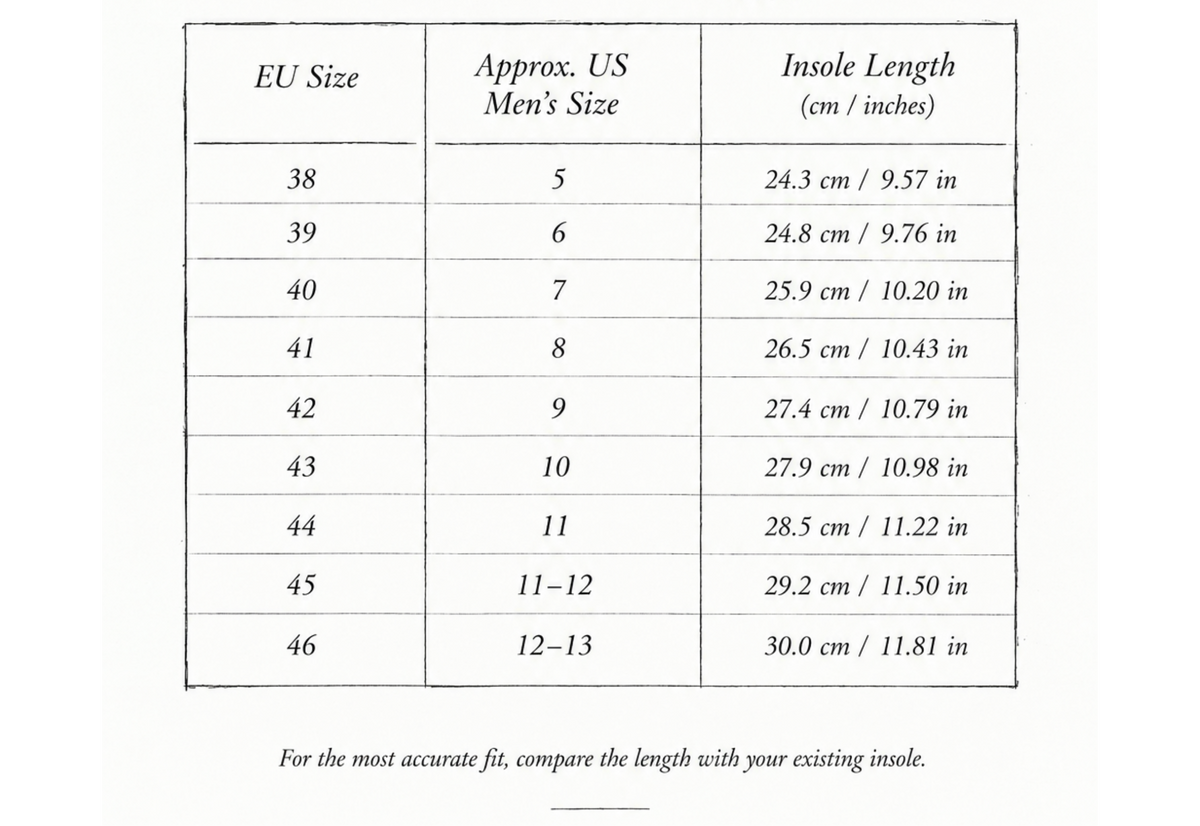
Saphir insoles are sized according to European shoe sizing. Use the chart to find the corresponding US size and insole length. For the most accurate fit, compare the listed measurement with the removable insole from a well-fitting pair of shoes.
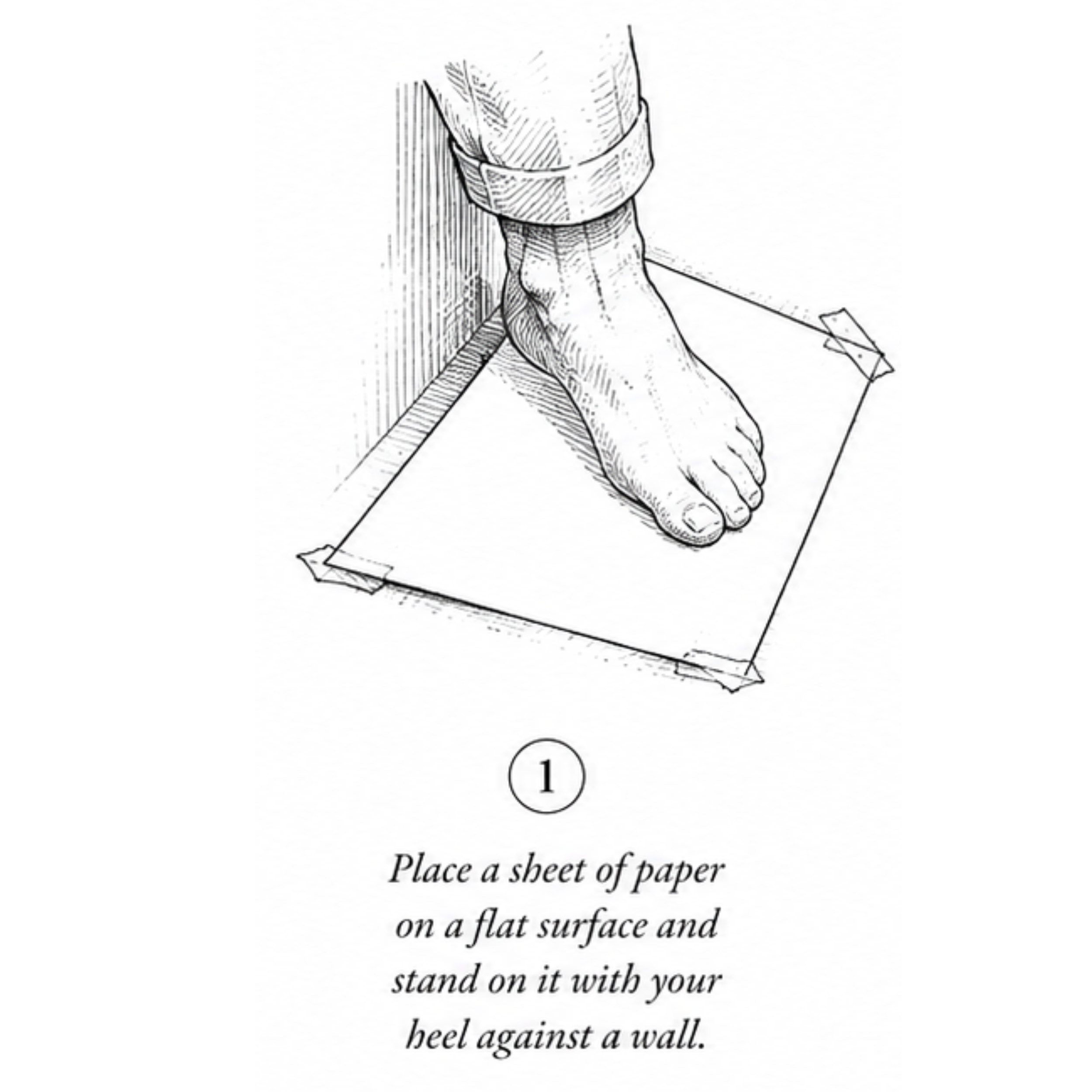
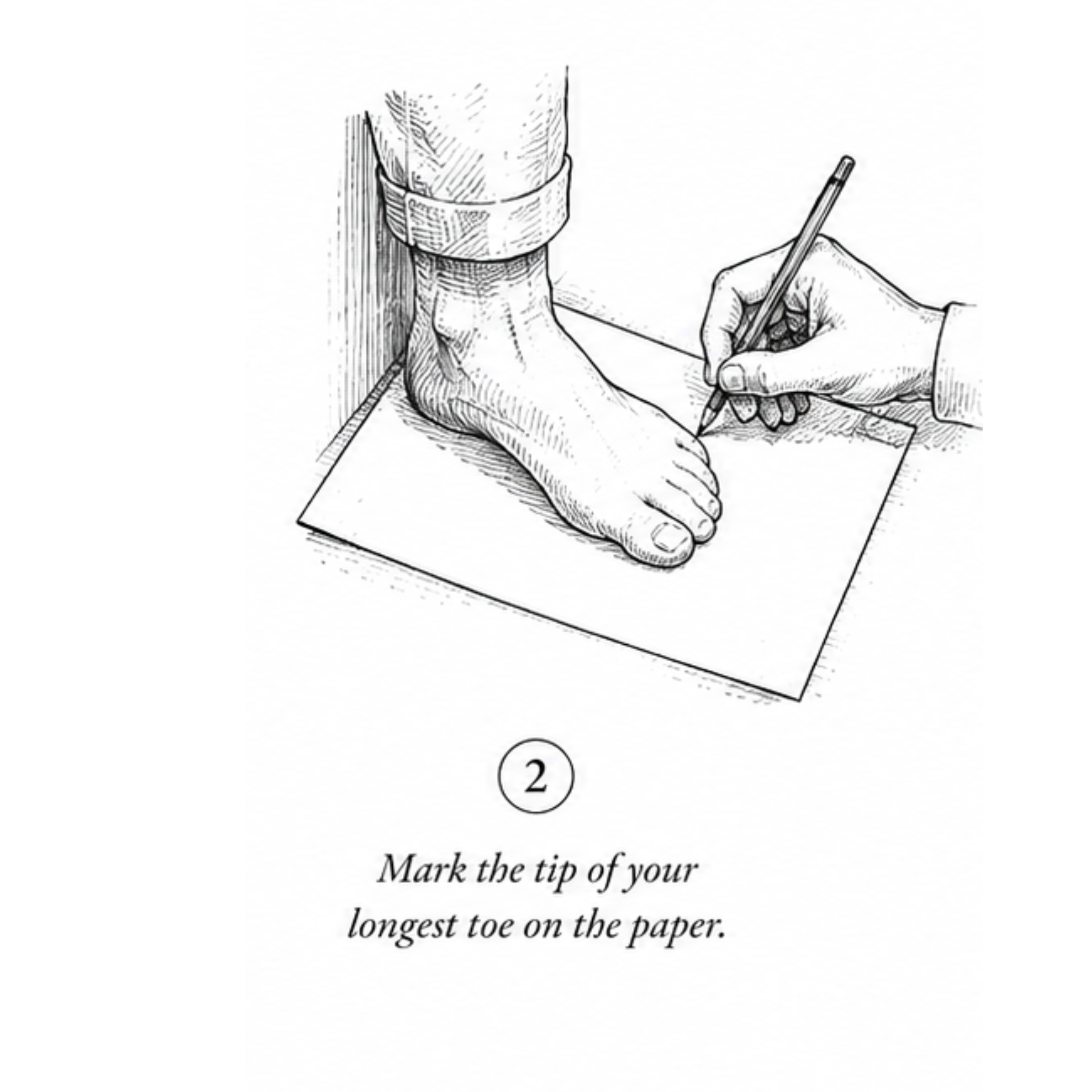
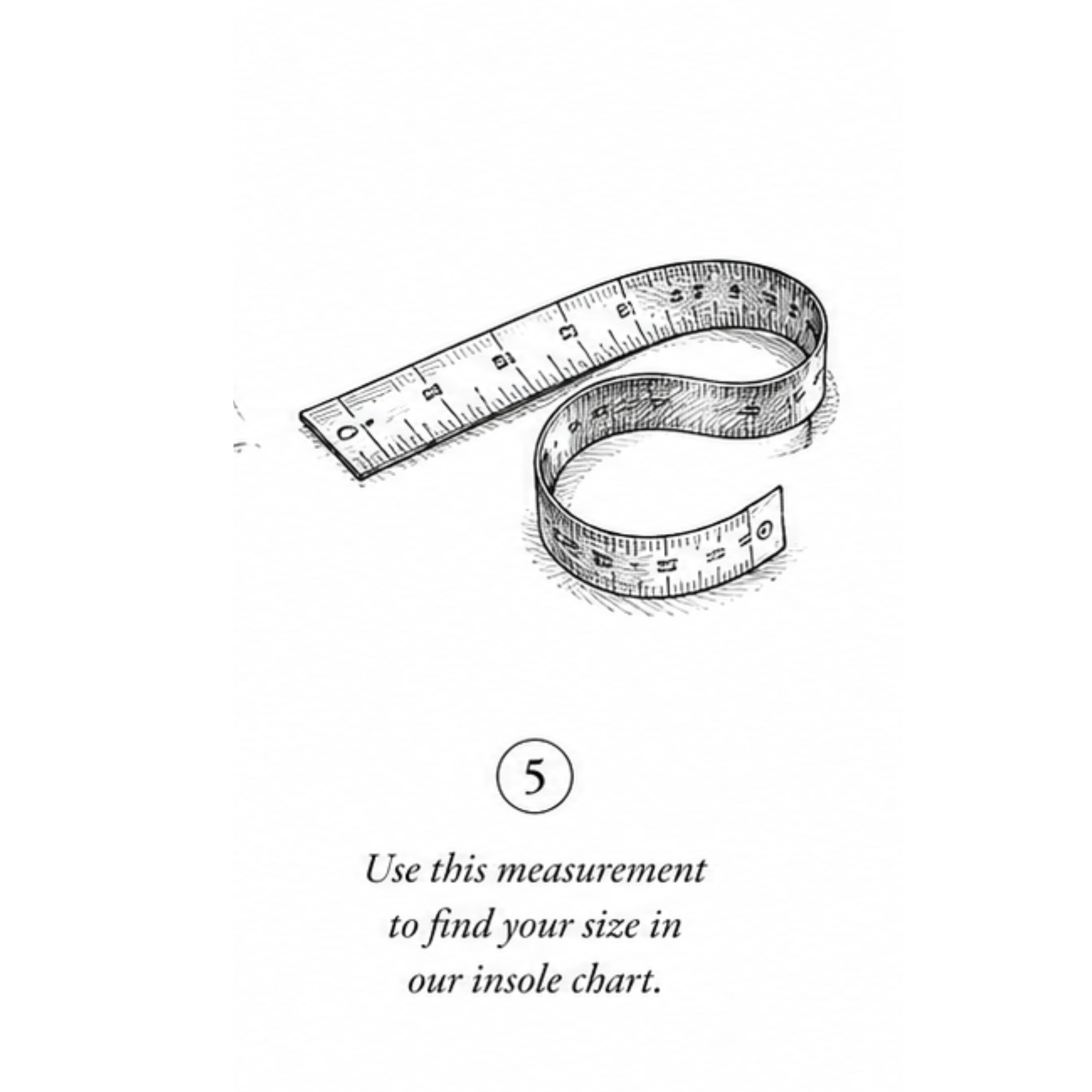
Not sure of your size? Measure your foot using the guide below and use the result as a reference when selecting your insoles.
Not sure which insole to choose? Explore our FAQs and product recommendations below to find the right insole for your needs.
MEASURING GUIDE
How to Measure Your Foot
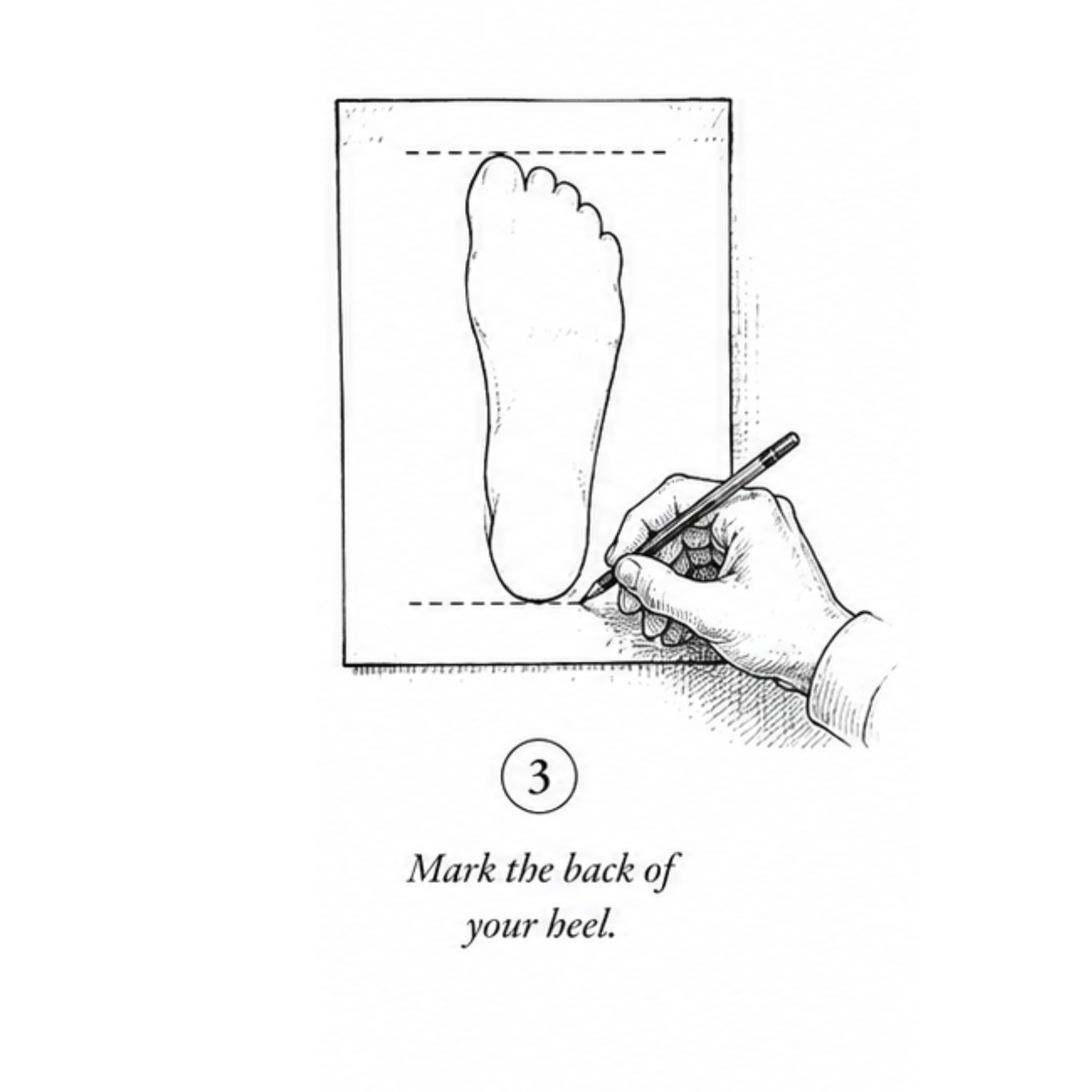
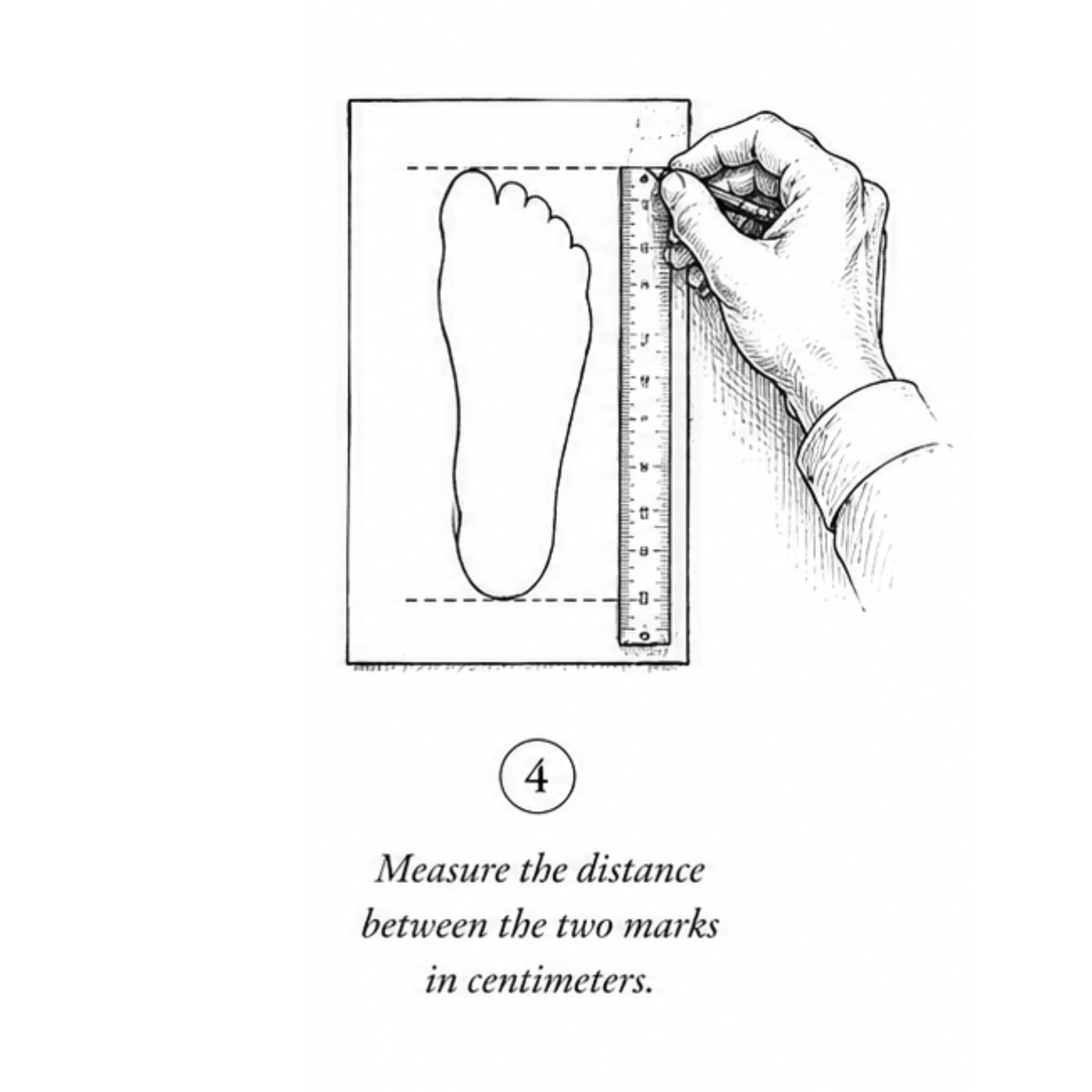
For added confidence when choosing your size, follow the simple steps below to measure your foot from heel to longest toe.

EVERYTHING YOU NEED TO KNOW
Insoles FAQ
Insoles can improve comfort, freshness, support, temperature regulation, or the fit of a shoe, depending on their construction. They can also replace worn or less comfortable original insoles and help create a more pleasant environment inside frequently worn footwear.
Whenever possible, use your shoe's EU size as the primary reference. If you are unsure, compare the dimensions of the new insole with a removable insole from a pair of shoes that fits you well. Our size and measuring guides can also help you select the closest match.
Choose the insole corresponding to your normal shoe size unless the individual product recommends otherwise. There is generally no need to size up simply because you are adding an insole.
If your shoes have removable insoles, replacing them will generally provide the best fit and avoid taking up unnecessary space inside the shoe. A thin insole may sometimes be placed over an existing one if there is sufficient room, but the shoe should never feel excessively tight.
Yes. Adding an insole occupies some of the internal volume of the shoe and can help improve the fit of footwear that feels slightly roomy. The effect depends on the thickness and construction of the insole.
Insoles should not, however, be used to compensate for shoes that are substantially too large or incorrectly fitted.
They can. Thicker, cushioned, thermal, or anatomically shaped insoles occupy more space than a thin leather insole. If your shoes already fit very closely, consider a thinner option and, where possible, remove the existing insole before fitting the replacement.
There is no fixed replacement schedule. It depends on how frequently the shoes are worn, the type of insole, perspiration, and general wear.
Replace them when they become noticeably compressed, worn, damaged, permanently odorous, or no longer provide the comfort or support they originally offered.
Remove them periodically from the shoes and allow them to air naturally, particularly after extended wear or exposure to moisture. Avoid placing leather insoles directly against radiators or other strong heat sources.
Keeping the inside of the shoe dry between wears also helps prolong the life of both the insoles and the footwear.
If due to repeated wear your Insole's natural leather requires a nourishing treatment, you can use Saphir Médaille d'Or Dubbin Graisse.
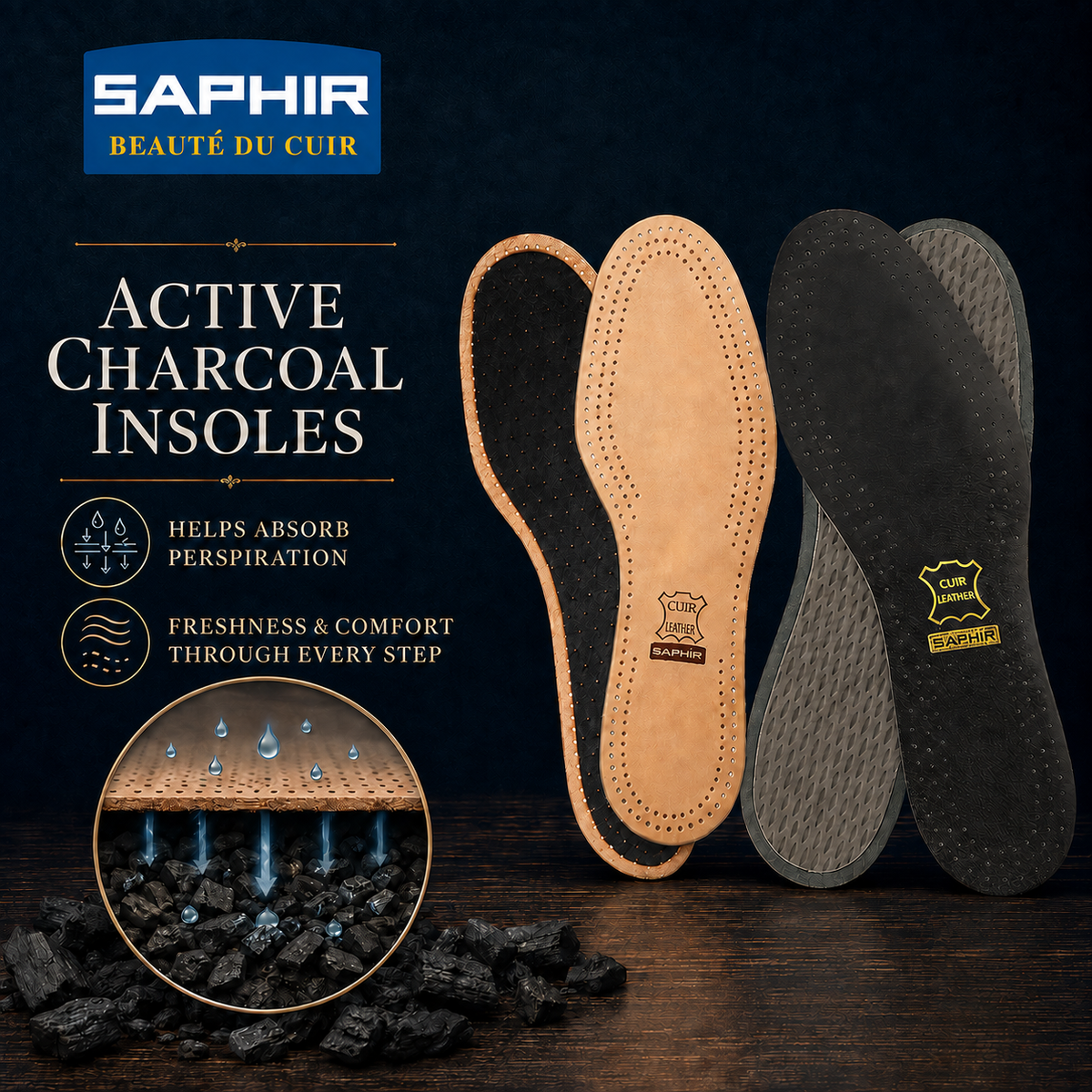
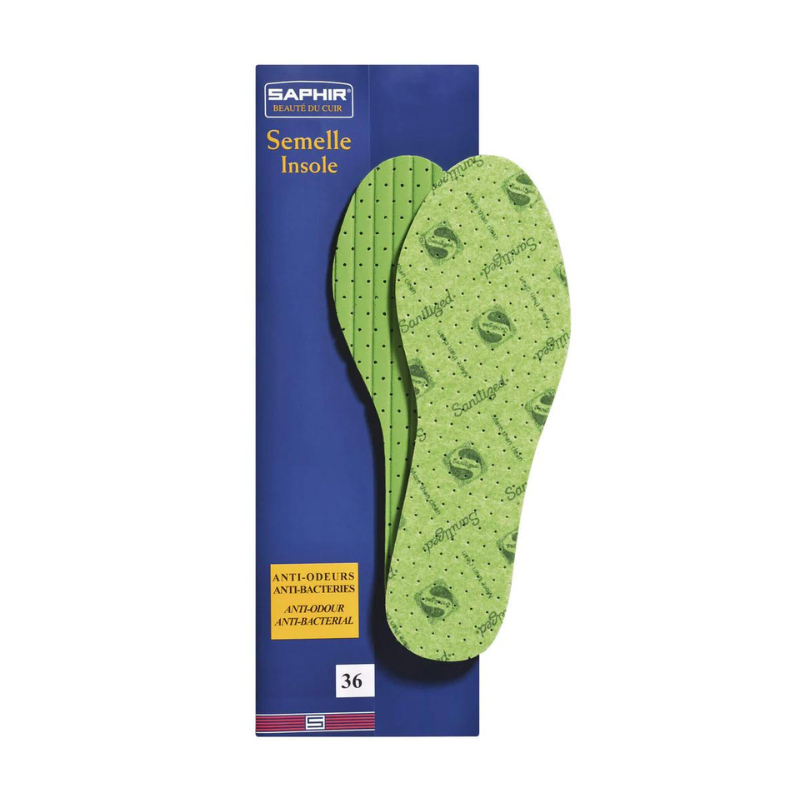
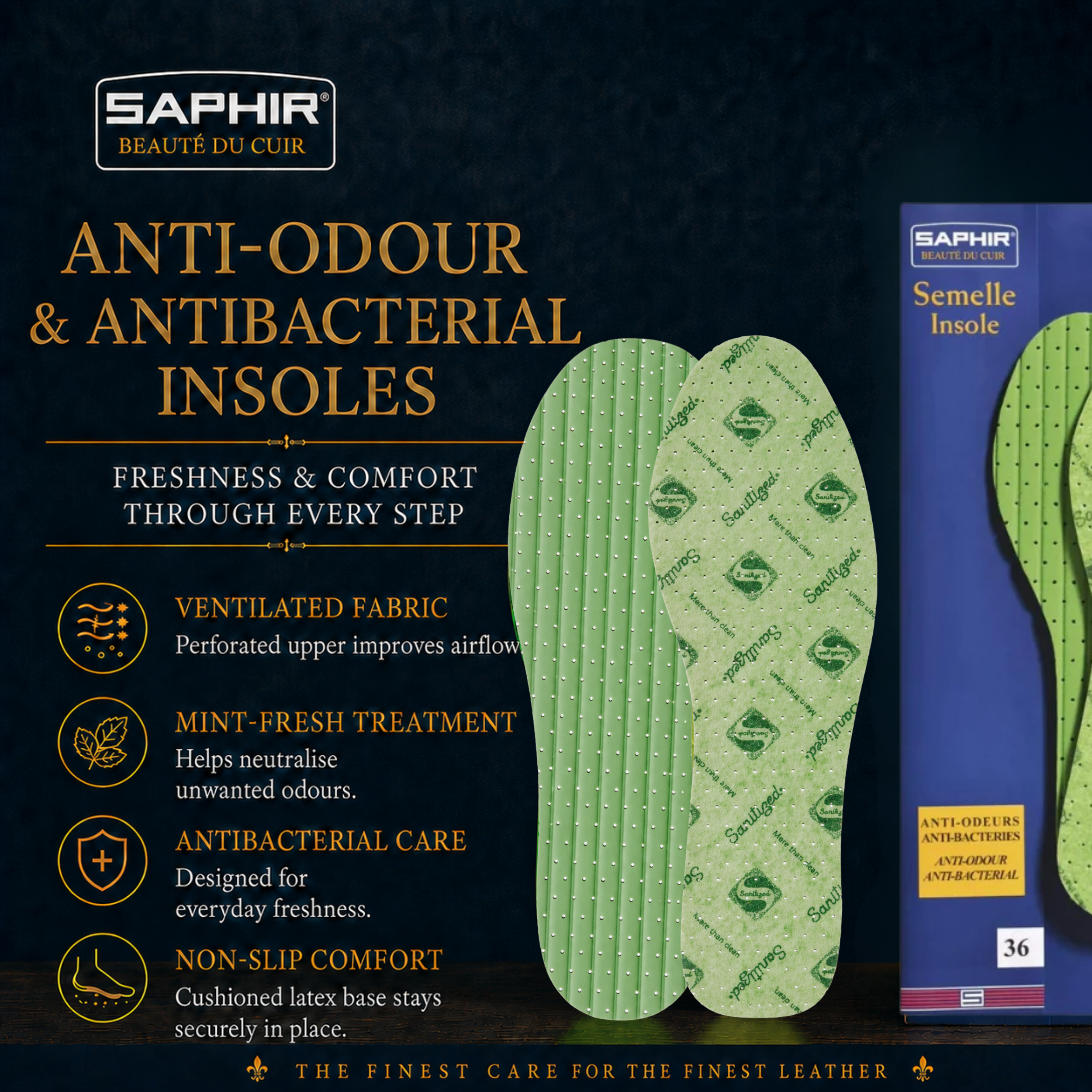
Certain insoles are specifically designed for this purpose. Saphir uses active charcoal in several models to absorb perspiration and help neutralize odour, while its Anti-Odour & Antibacterial Insoles use a perforated construction designed to improve ventilation.
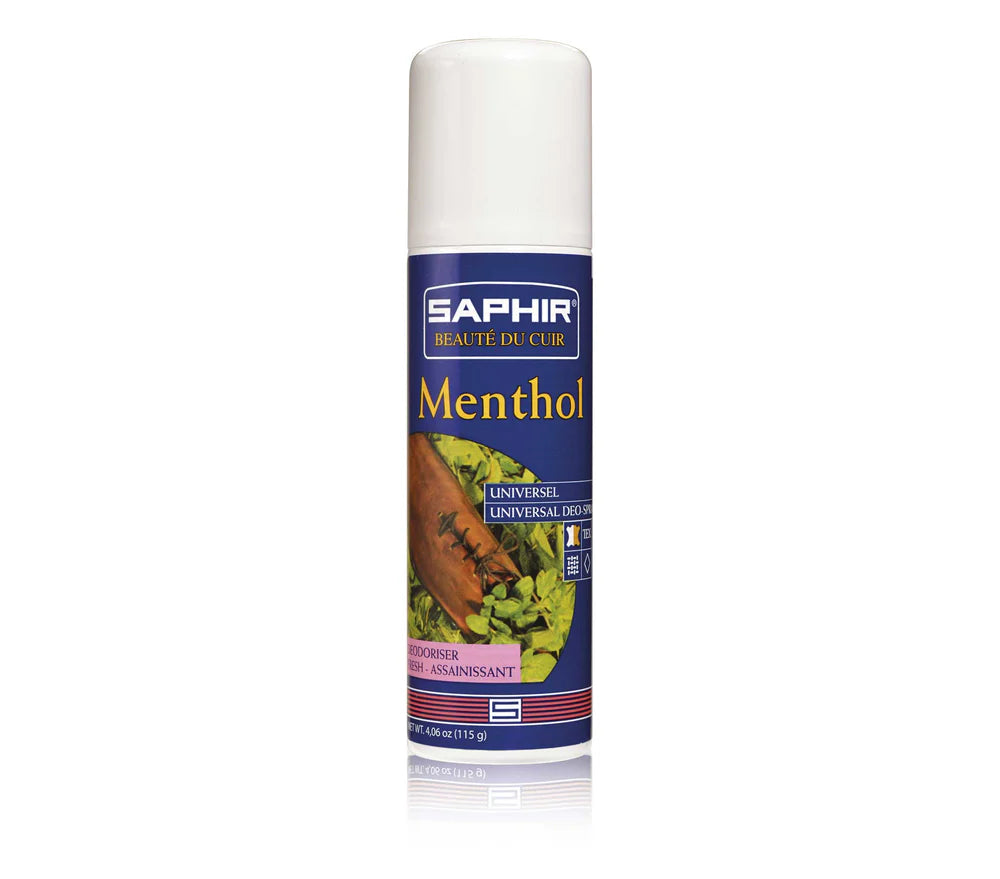
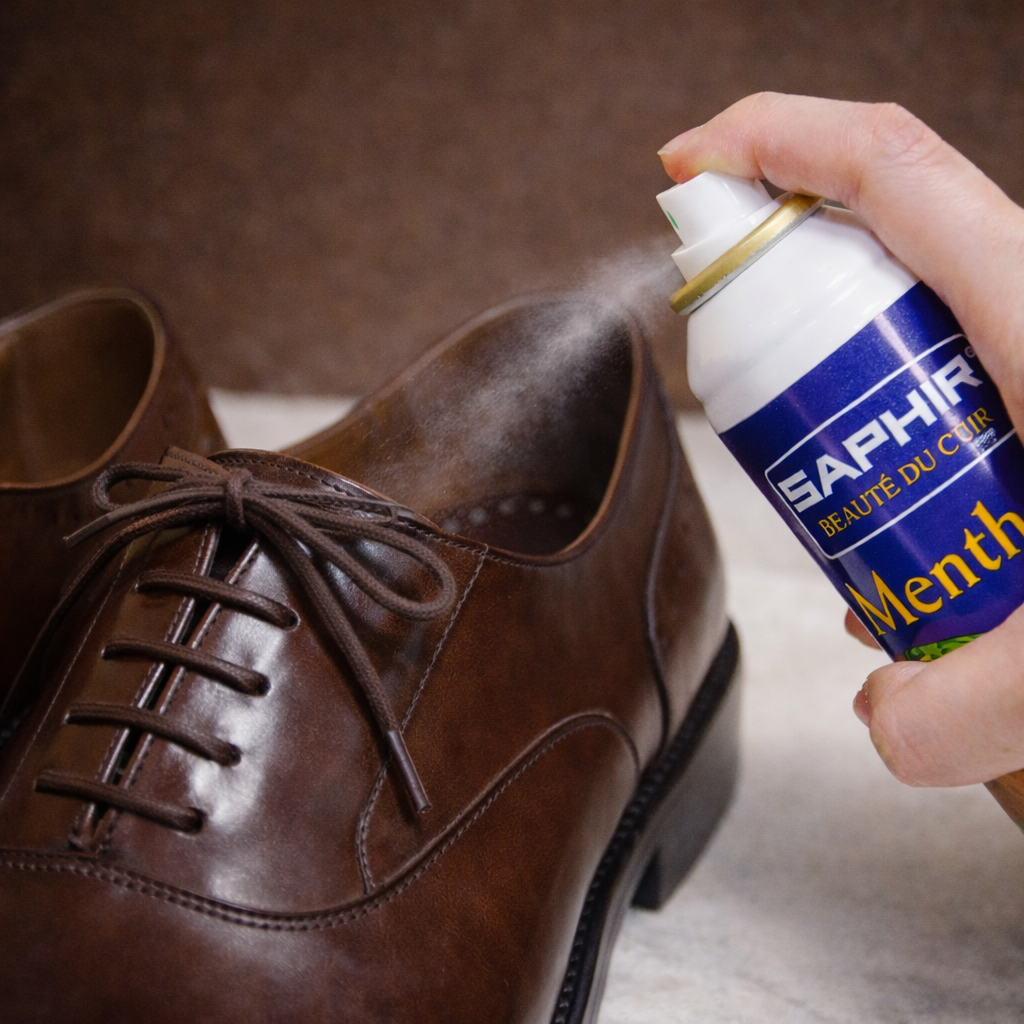
For additional freshness between wears, Saphir Menthol Shoe Deodorant can be used to deodorize and refresh the interior of footwear. Saphir specifically describes Menthol as a deodorizing and refreshing treatment.
You can transfer removable insoles between similarly sized shoes, but keeping a dedicated pair in frequently worn footwear is generally more convenient and allows the insole to conform naturally to that shoe.
For shoes worn regularly, alternating pairs and allowing both the footwear and insoles time to air between wears is preferable.
Which type of insole should I choose?
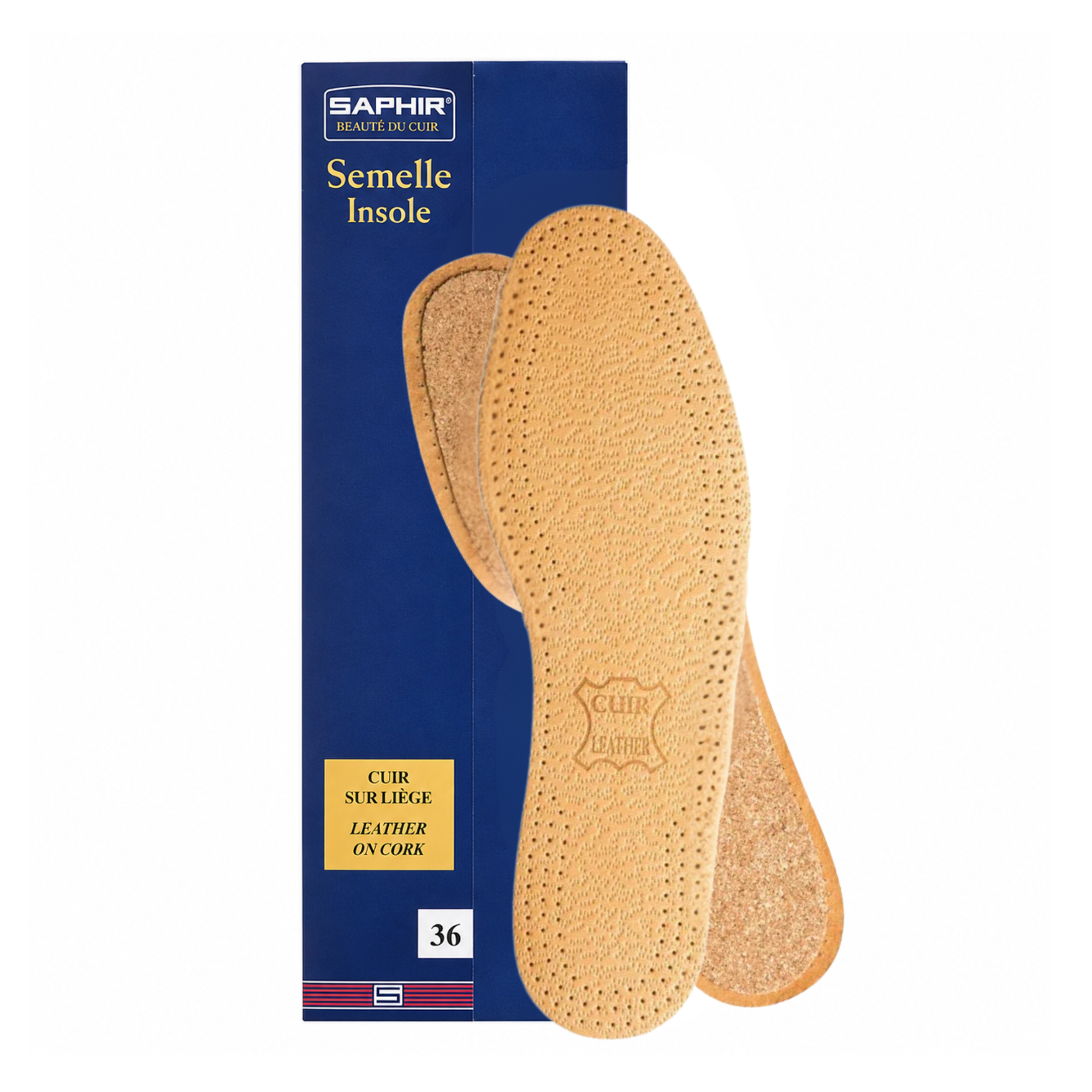
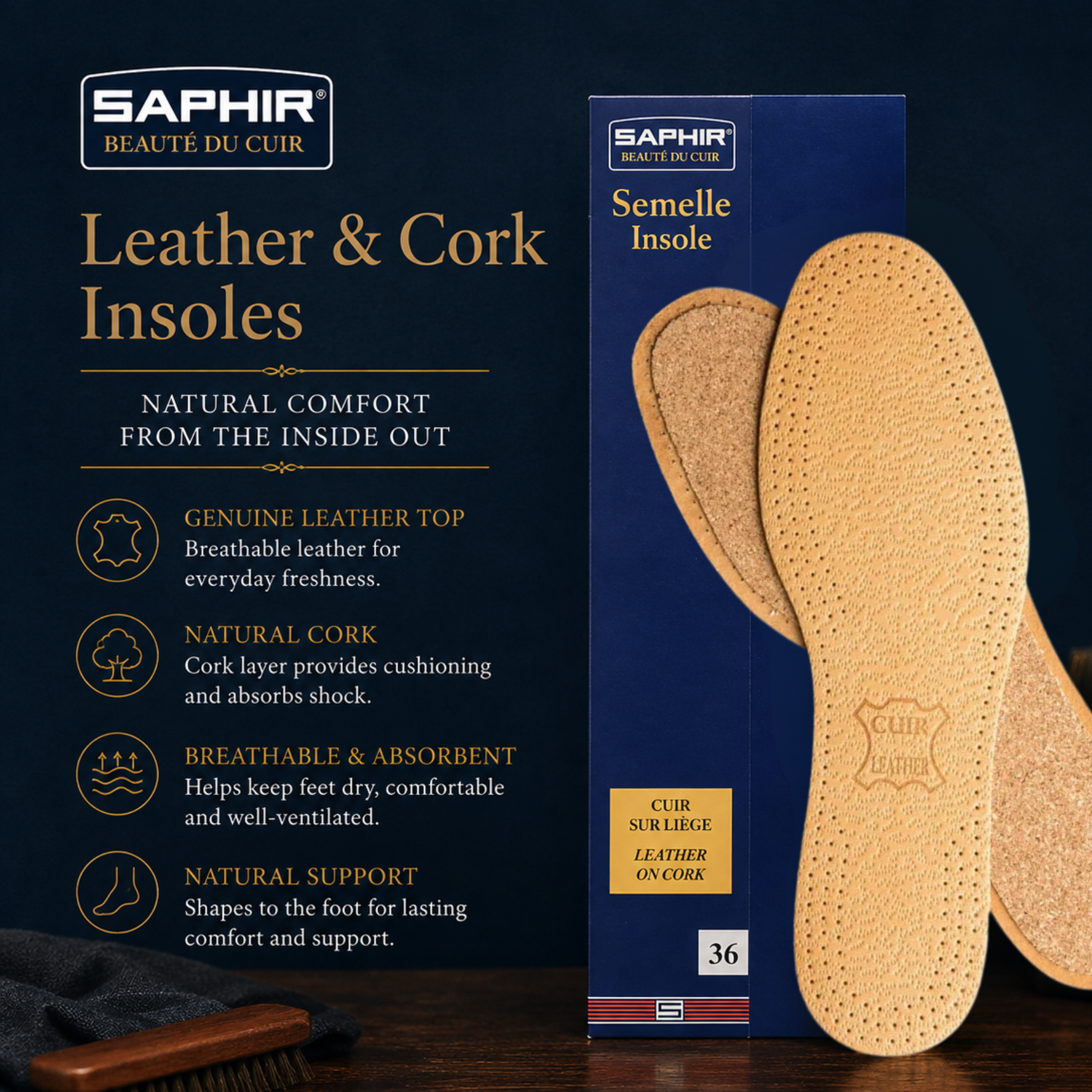
Leather & Cork Insoles combine a leather upper with natural cork. A good all-around choice for dress shoes and everyday footwear when you want a traditional, comfortable insole with a natural feel. Saphir characterizes this model particularly for its suppleness and strength.
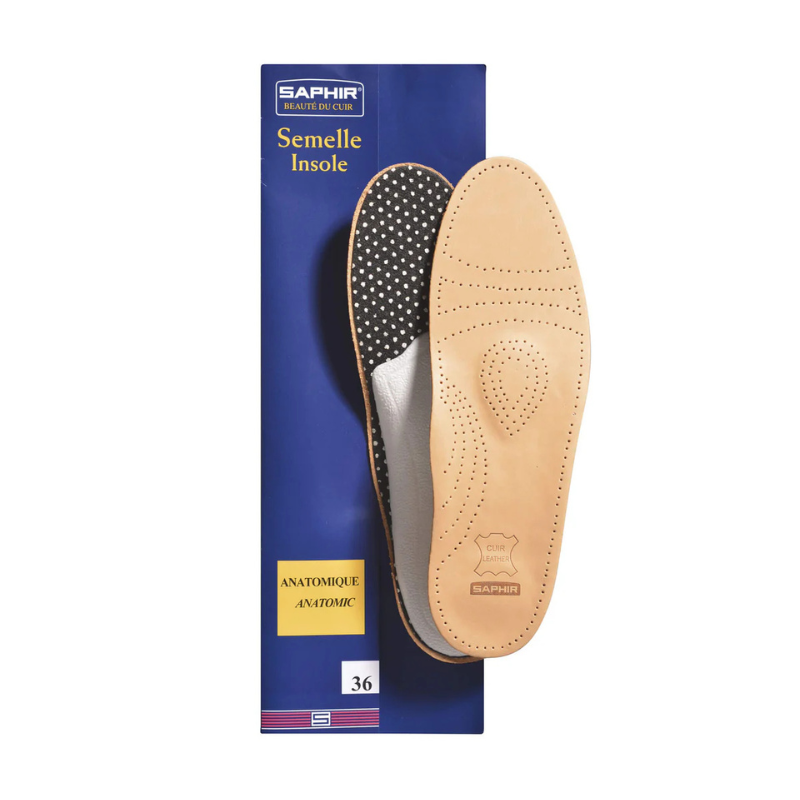
Anatomic Insoles are designed to provide greater support and stability. Their anatomically shaped construction includes metatarsal support, while the active-charcoal layer helps absorb perspiration and neutralize odour.
They are the better choice when support is the priority rather than simply adding a traditional flat insole.
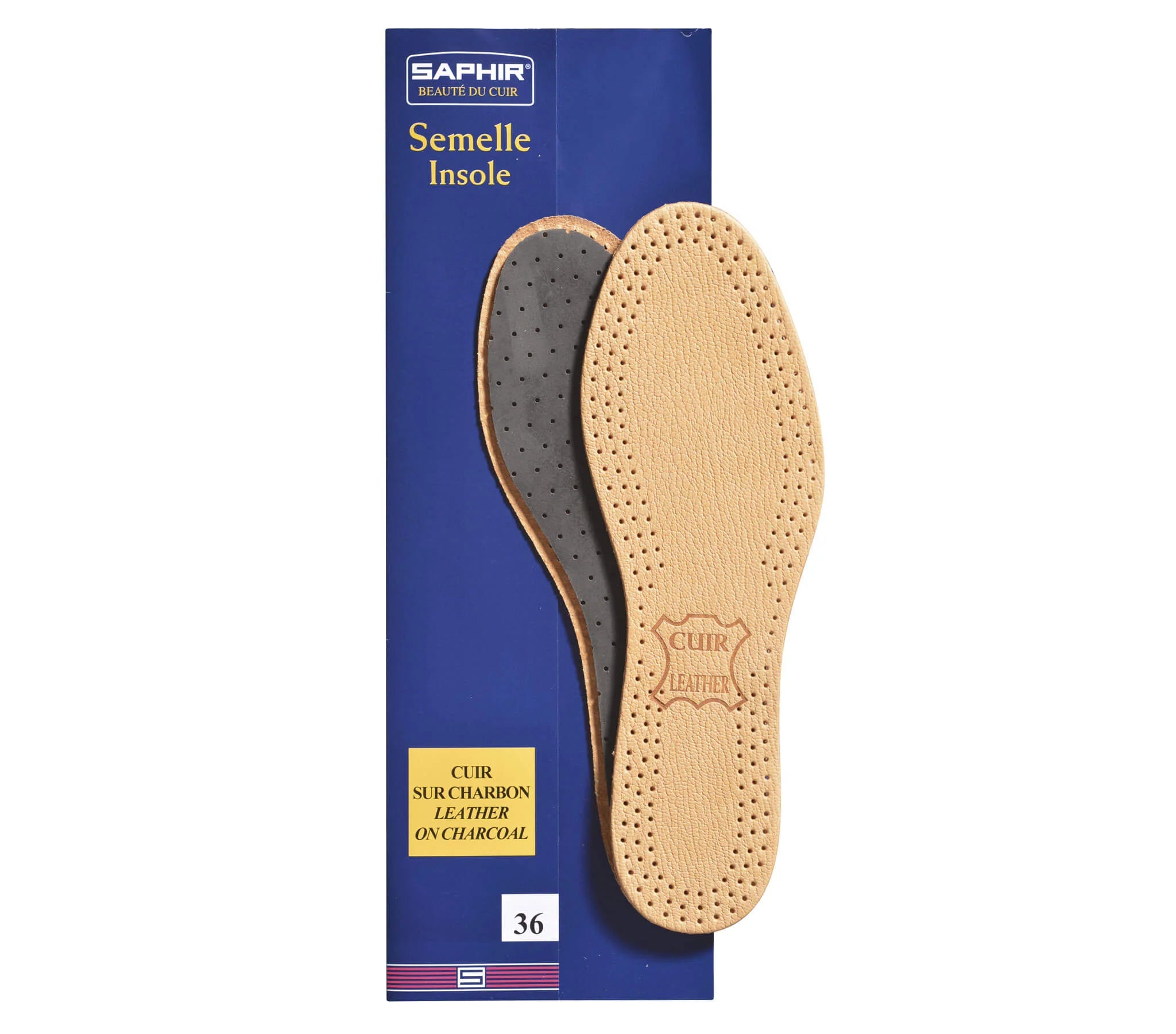
Leather & Charcoal Insoles combine the feel of leather with the absorptive properties of charcoal. Saphir recommends this construction for suppleness, strength and absorption.
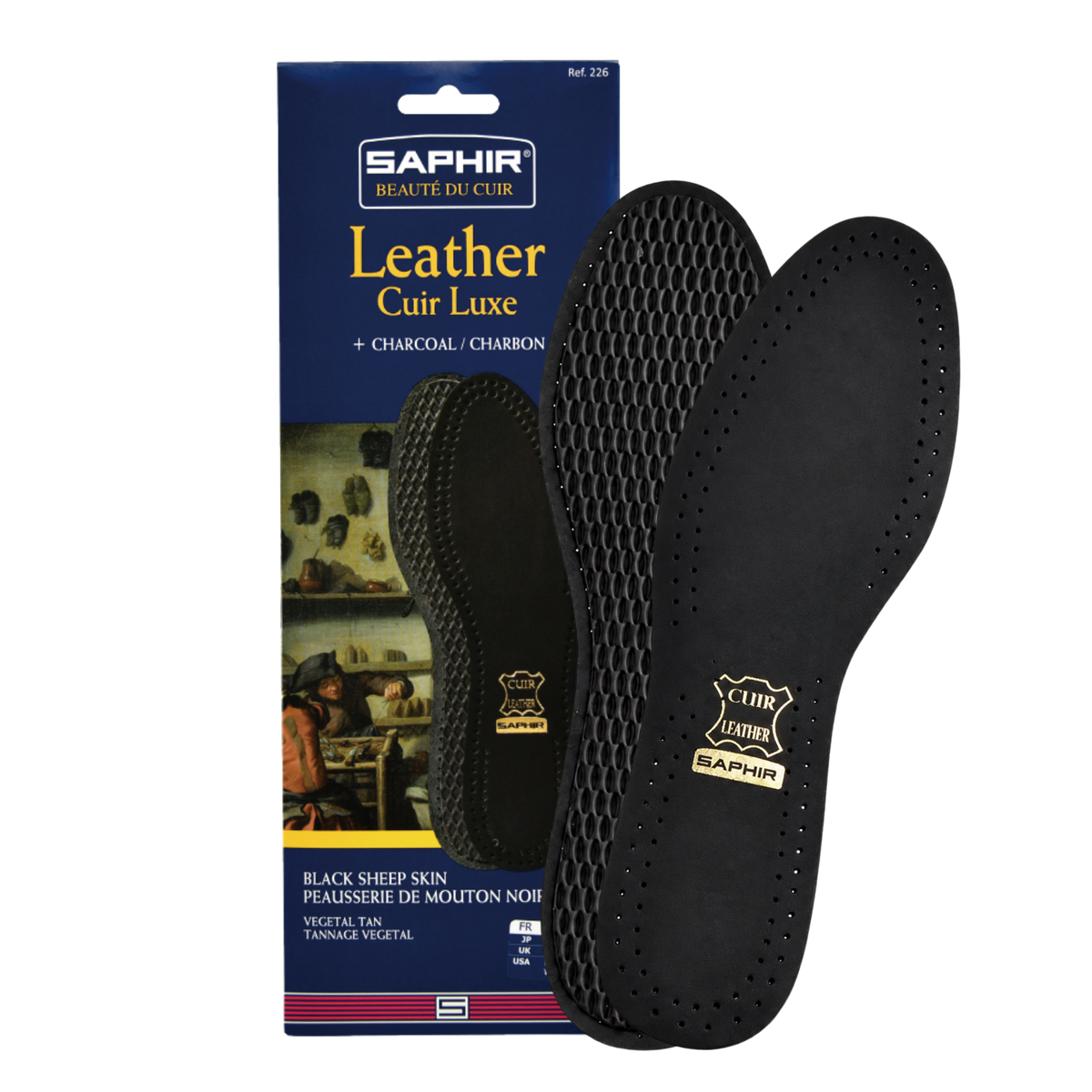
The Black Leather & Charcoal Insoles offer the same general moisture-management principle in a black leather finish, particularly suitable for darker footwear. Saphir describes this version as providing comfort and moisture absorption.
Anti-Odour & Antibacterial Insoles are the more specialized choice when freshness is the main concern. Their perforated fabric construction encourages ventilation inside the shoe.
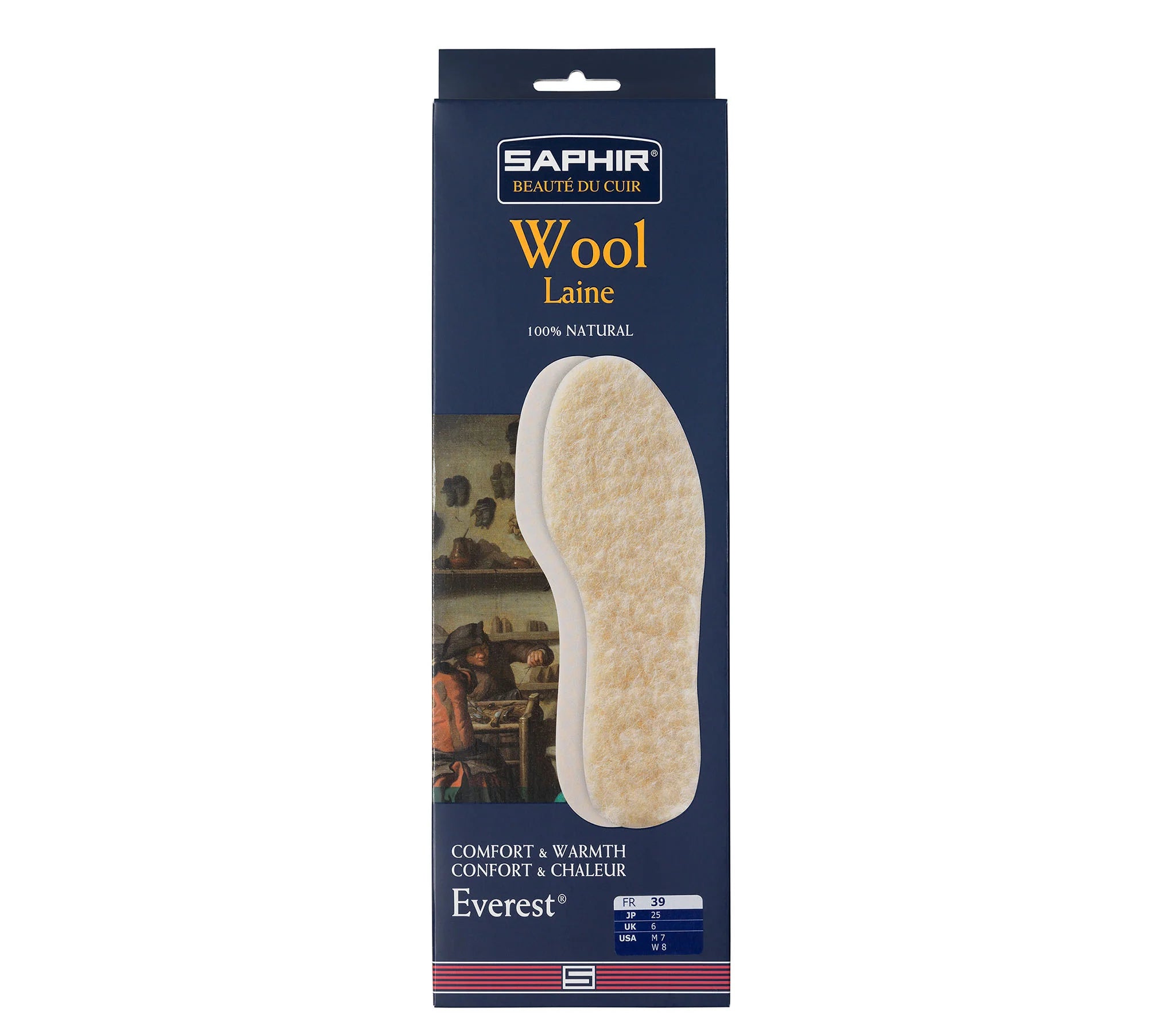
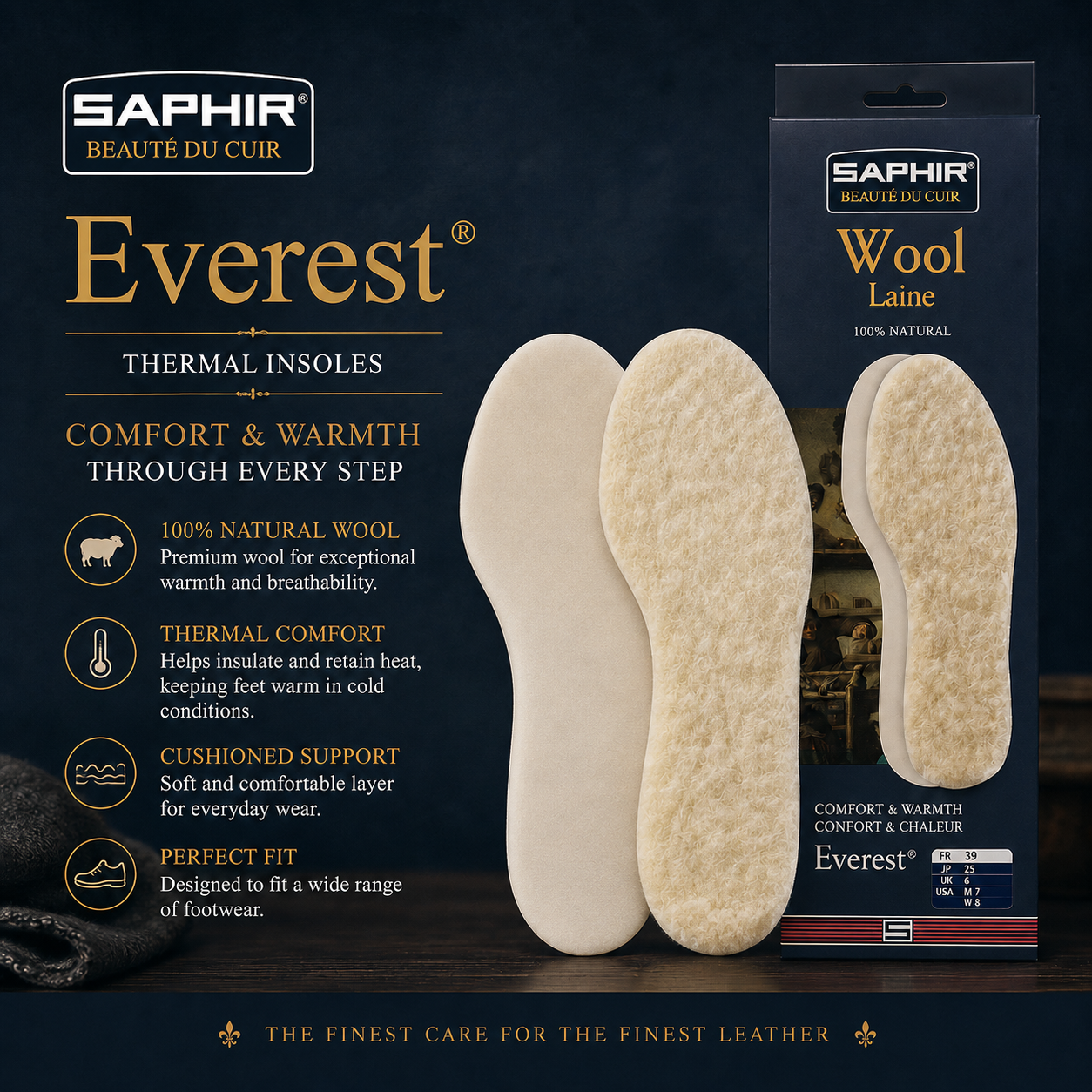
Everest Thermal Insoles are designed specifically for very cold conditions. They are the appropriate choice for winter footwear, boots, outdoor use, and situations where insulation from the cold is more important than keeping the insole as thin as possible.
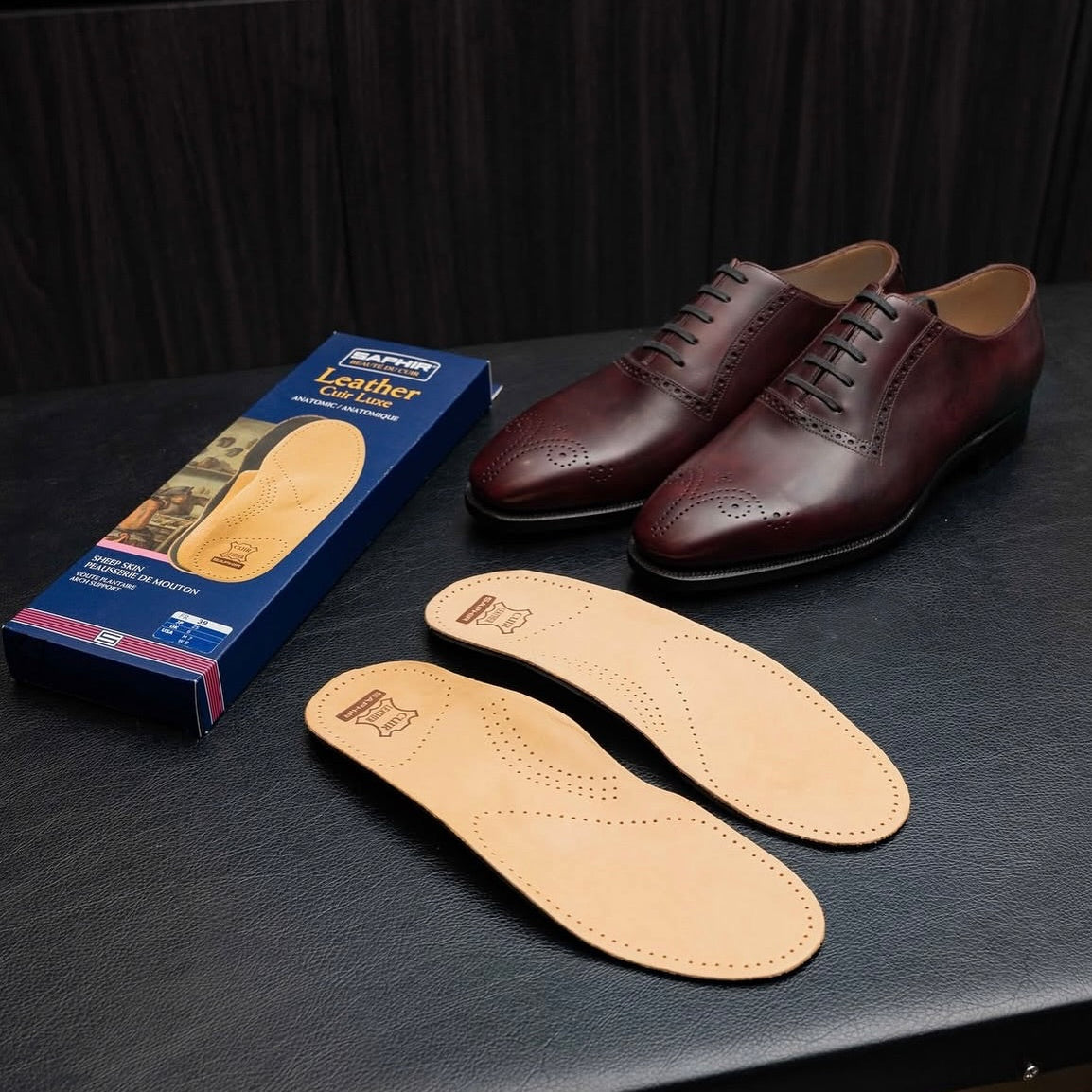
Saphir Médaille d'Or Leather Insoles are the choice for customers looking for a refined, traditional leather insole, particularly suited to quality dress shoes.
Insoles & Comfort